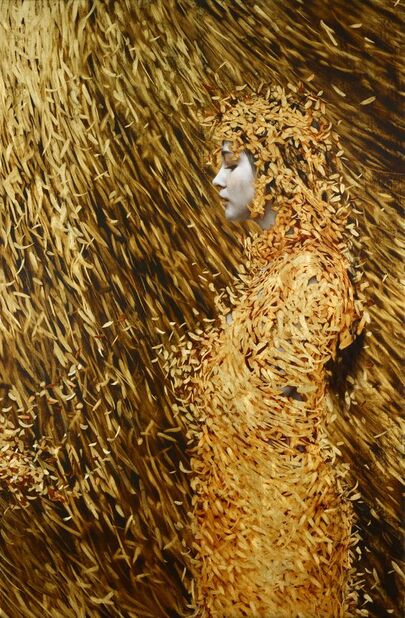
 Artist Brad Kunkle lives and works in New York where he paints these extraordinary, dreamlike scenes of women swathed and shrouded in layers of leaves. The leaves often form the backdrop of his images functioning as water, wind, blankets, earth or perhaps all of the above.
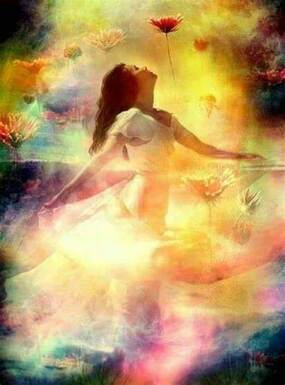 by Corina Luna Dea, author of Archaeology of the Woman's Soul.
When pieces of you are breaking and falling to the ground, do not rush to pick them up. Instead, let them all fall…Let them sit there as they lay until they become acquainted with each other, until each piece of you shares what was loved and lost, what hurt and healed, what was re-gained and re-claimed from the ashes of dreams that never came to be… If your hand reaches out to grab the falling pieces before they touch the ground, stop and let your eyes embrace with warmth all that hurts until the winds of change blow once again on the landscape of your heart…Let the fire of destruction and renewal come in its own time and burn away all that is no longer needed for your highest good… After all the pieces of your being lay there unmoved and untouched, after your tears wash the face of Mother Earth, after you walk through the Dark Night of the Soul and learn to love the darkest places of your heart, then and only then you are ready to kneel down to the holy site of your life. Now you are ready to pick up the broken pieces of you and with the brush of love you can dust away the smallest grain of sand that touched your face…Now you are ready to let your Fire Stories become the poetry of your life. The pieces you were once so eager to mend, now have found a way of taking care of themselves. You sit and just be the Observer of your life…No longer judge, no longer ask why or why me. In the end, you realize you first had to break apart to feel whole… To feel the Wholeness that lives in your bones for eons. Because you were never anything else, but Whole… You are always Whole, even when it feels that you shatter to pieces. And whole you are, sister of my heart. Whole and holy. Walking a sacred path to the core of your being. A journey of remembering and excavating what wants to be revealed. The winds of change come along and old dust and emotional sediment is being blown away. The ancient story must be retold. Memories flow through the crevices of heart, wanting to be revisited. At all cost. You stop. You look around wanting to be safe and certain. And then, you decide that you are ready to pick up the pieces and get on your knees. You sigh deeply. You look up. You feel the ground beneath you and a strength you never knew you had before comes over you. Your heart fills up and a warm feeling overflows from deep within. The shackles break. The time is now to no longer be afraid of what hurts. Because what hurts no longer has power over you. Nobody and nothing has power over you anymore. Only you. You look around and all of a sudden everything makes sense. Every piece of who you are tells a story. Your story. Your truth. Giving meaning to your life through your thoughts. Your feelings. Your emotions. Your Voice. Your truth. Your truth, the way you live it without social conditioning and the shadow of patriarchal dogma. Without the way you were told to be and the way you were expected to live your life. Free of labels. Free of others expectations of you. No longer compromising your authenticity, integrity and values. I lived labeled for many years. And I believed those labels. For many years. Too many… Let’s be free, sister. Let’s pick up the pieces and give them a new meaning. Let them tell a new story of survival, strength and resilience. 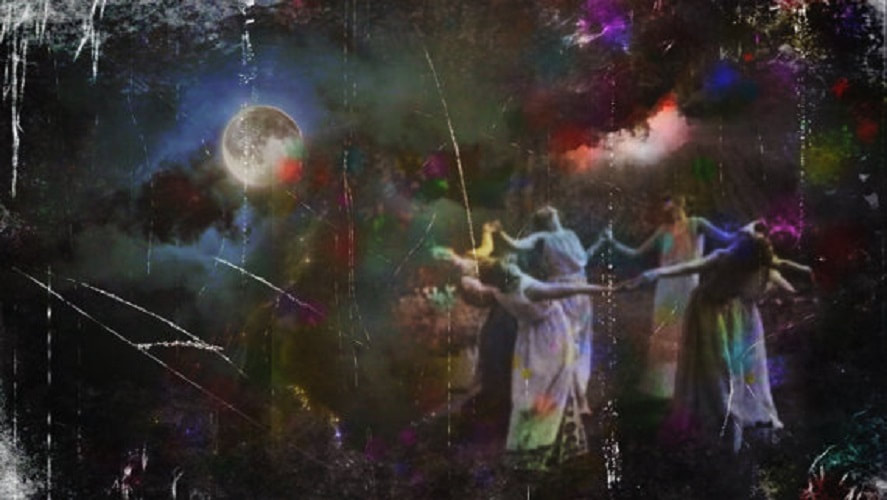 In lunar glow, a tale unfolds,
Where moon and women's mysteries behold. For both possess an enigmatic grace, A dance of secrets in celestial space. The moon, a guide through darkest nights, Reflects the woman's hidden depths and lights. They share a rhythm, a cyclical flow, Unveiling wonders only they both know. 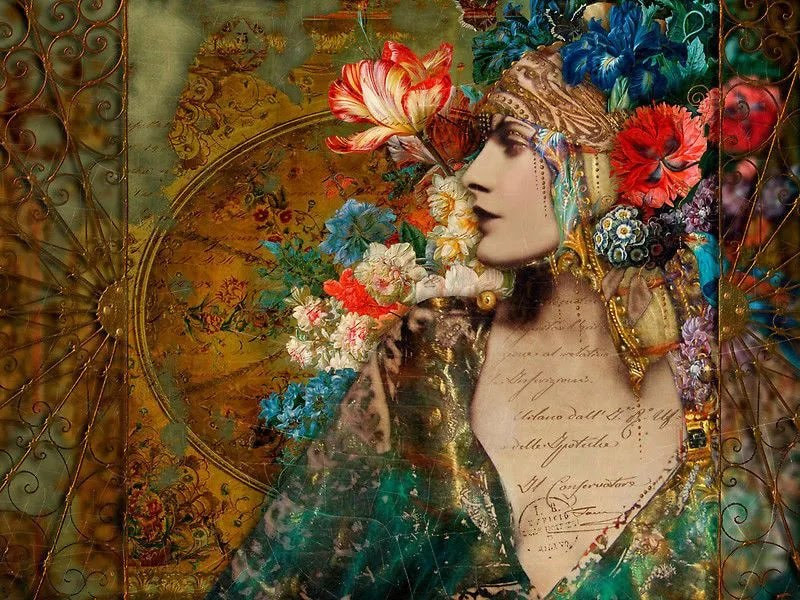 Summer's flowers paint the world with vibrant hues,
an exquisite tapestry of nature's masterpiece. 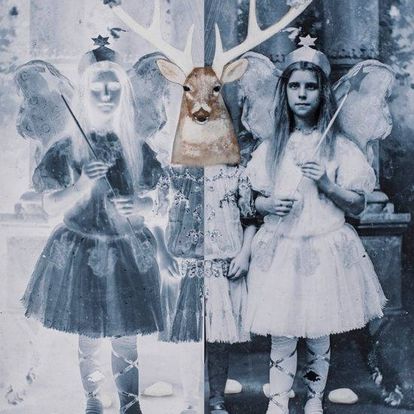 Unleashing dreams with a flick of her wand, the girl and her majestic deer embark on a magical journey through realms of wonder.
artist: Alexandra Eldridge Artist: Tino Rodriquez, a Mexican/American painter based in San Francisco, CA 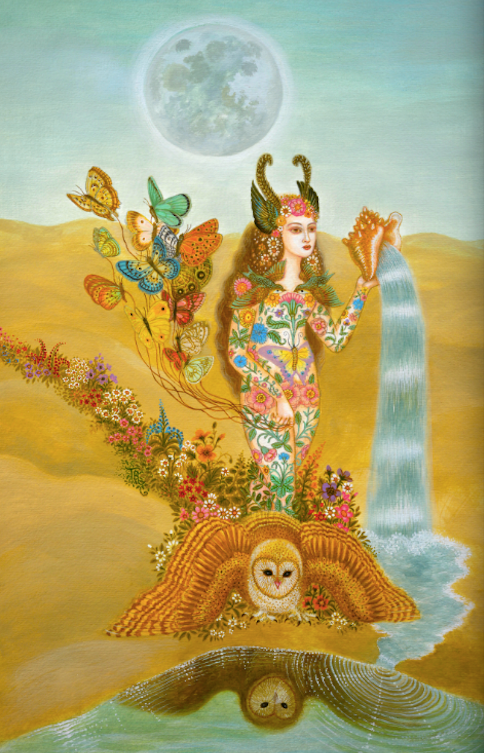 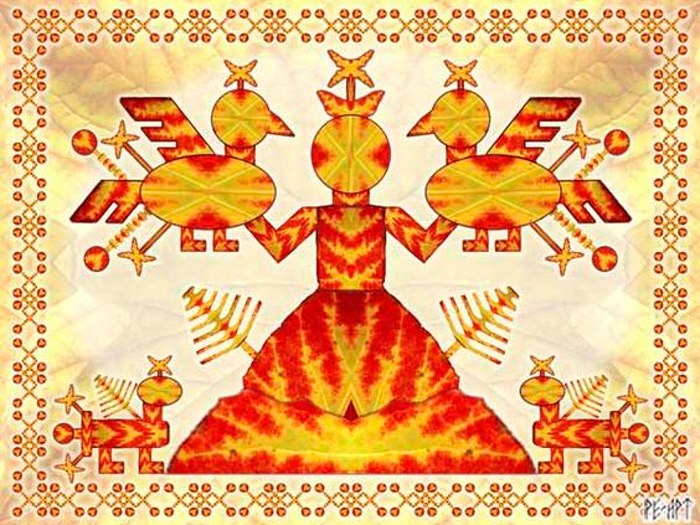 Slavic Mother Goddess Mokosh ("Moist Mother"). She is Goddess earth and sky, of sunlight, life and death, spinning, weaving, embroidery, arts and crafts, women's work and destinies, children, wisdom, seasons, harvests, and rainfall, horses, game birds and chickens, and possessor of the World Tree, whose unbroken worship persists to this day.
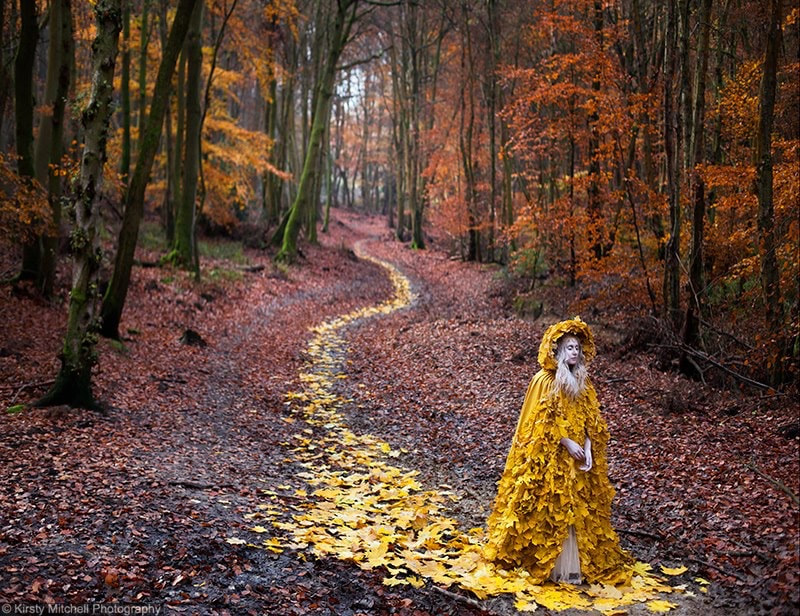 When it comes my time to sleep, I will not wail, I will not weep, I'll lay my weary body down, On beds of leaves both green and brown, I'll sleep as nature takes its toll, Reclaims my once embodied soul, And wraps me in the earth's embrace, A quiet, peaceful resting place, The time outside will still elapse, But I won't feel my bones collapse, And I'll return back where I came, To let the cycle start again. —e.h (from The Poetic Underground) Kirsty Mitchell Photography  “A deep, intimate connection inevitably brings up all our love wounds from the past. This is why many spiritual practitioners try to remain above the fray and impersonal in their relationships—so as not to face and deal with their own unhealed relational wounds. But this keeps the wounding unconscious, causing it to emerge as compulsive shadowy behavior or to dry up passion and juice. Intimate personal connecting cannot evolve unless the old love wounds that block it are faced, acknowledged, and freed up.” more
|
Yana Castle
Mentor for women, Hypnotherapist, Author, Adventurer, Researcher, Dreamer, Healer, Buddhist, Feminist, Folklorist, Dancer in liminal spaces, Leopard lover. Archives
April 2024
Categories |
 RSS Feed